Eleventy in a Box
A premium Eleventy starter kit for designers and developers who want to spend less time setting up the same project structure and more time designing distinctive websites.
Yesterday, something I said on Twitter seems to have resonated. “It takes a court order to get your personal data from Twitter, but just anyone can get it from Facebook.”
Facebook has updated its platform “making a user’s address and mobile phone number accessible as part of the User Graph object” to application developers. Although I don’t make Facebook applications or understand why people use Facebook — I don’t — I know this is a big deal.
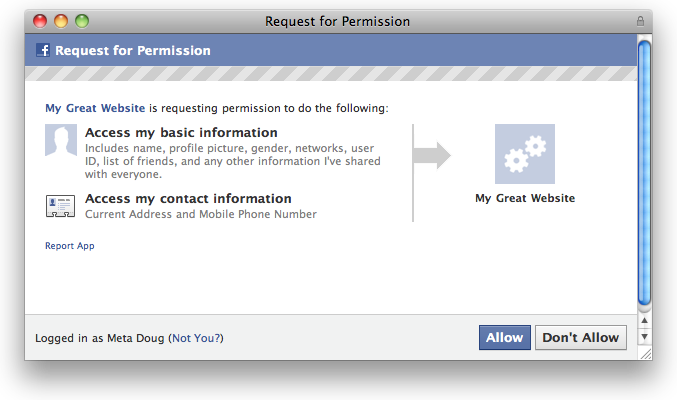
While on one hand, Facebook admits that, for example, my teenage nieces’ address and mobile numbers are “sensitive information”, what they themselves refer to as a “standard permissions dialog” hardly makes that clear.
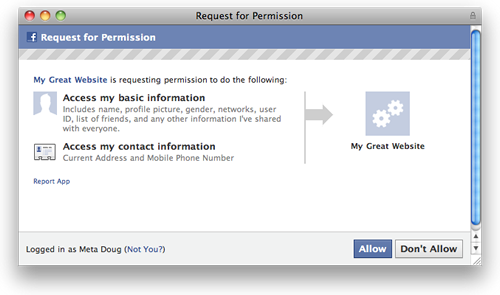
A user’s address and mobile number is clearly not standard information and Facebook should make it clearer that a user is about to share more than “basic information” (name, profile picture, gender, networks, user ID, list of friends, and any other information [they] shared with everyone), by improving the design of their standard permissions dialog.
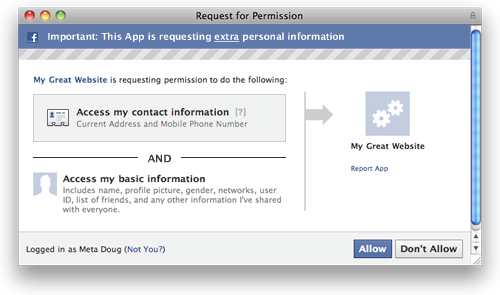
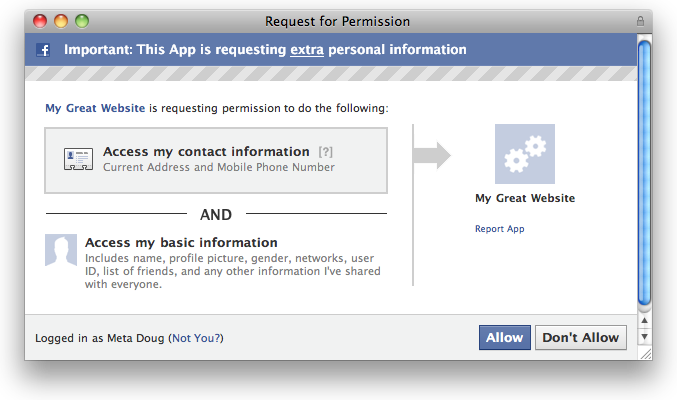
It would be trivial for them to add an important notice to the top of the dialogue box and then emphasise that contact information is being requested in addition to standard information by drawing a user’s attention to it. They should, in my mind, also include a help dialogue that explains the implications of clicking “Allow.”
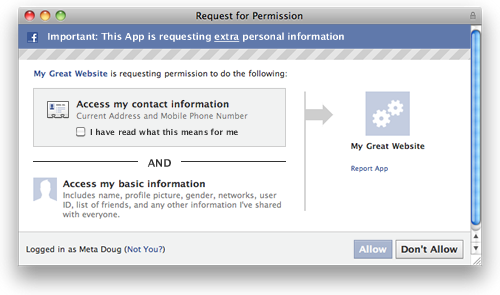
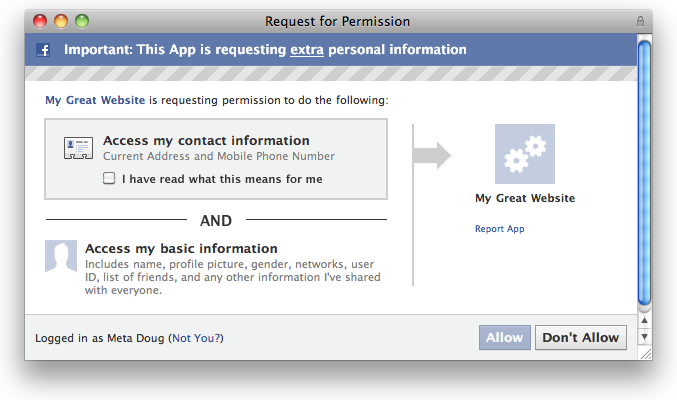
Many people skim read (at best) or don’t read at all (at worst) messages about changes to terms of service like this. They just click the “I accept” or “Allow” button, trusting that an application or service has their best interests at heart. To make sure its users fully understand the implications of clicking “Allow”, Facebook should disable that button until a user confirms that they have read and understand what all this really means for them, their children and their privacy.
A premium Eleventy starter kit for designers and developers who want to spend less time setting up the same project structure and more time designing distinctive websites.
Contract Killer is plain and simple and there’s no legal jargon. It’s customisable to suit your business and has been used on countless web projects since 2008.
Free compound grid and modular grid layout generators, plus a set of HTML/CSS layout templates you can call on to make more interesting layouts, available to buy.